This article is an on-site version of our Europe Express newsletter. Premium subscribers can sign up here to get the newsletter delivered every weekday and fortnightly on Saturday morning. Standard subscribers can upgrade to Premium here, or explore all FT newsletters
Good morning.
Today, our finance correspondent reports on the European Commission’s concessions to avoid rejection of its new budget proposal by the parliament, and our climate correspondent explains why EU delegates arriving at COP from today may feel a little sheepish.
Budging
The commission has agreed to make tweaks to its budget proposal to stave off a rebellion inside the European parliament, rowing back on some aspects of its proposed reform while keeping the overall architecture of its spending plans intact — but it’s not clear that will be enough, writes Paola Tamma.
Context: MEPs and the EU executive have spent weeks wrangling over a key part of the commission’s overhaul of the EU’s next seven-year budget, which aims to bundle together existing funds for agriculture and regional development into so-called national and regional partnership plans.
The commission argues the plans give countries more leeway to allocate cash. But MEPs from the four main pro-EU groups fear this gives capitals power to starve opposition regions of EU funds, and skews competition between farmers across EU countries.
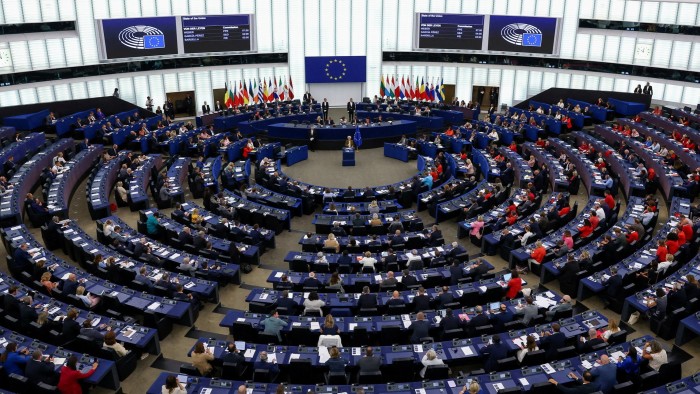
Centre-right, social democrat, liberal and green MEPs last week jointly called for the commission to make changes, or they would reject this part of the budget proposal in a vote next week.
Blinking first, the commission yesterday evening told key MEPs it was open to making three concessions: strengthening the regions’ role by giving them a mandatory say over how the money is spent under the national plans; modifying the Common Agricultural Policy regulation — while not touching the amount allocated to it — and giving the parliament a bigger voice in the process, according to four people familiar with the discussions.
The commission ruled out making formal amendments to its proposal, two of the people said. It’s unclear if MEPs, who insisted on legally binding changes, will deem them sufficient. The commission has also vowed not to make any further concessions, one of the people added.
A meeting between senior officials from the member states, the parliament and the commission is set to take place in the coming days to find a way forward.
“Before any meeting takes place there needs to be a legal proposal on the table,” said Siegfried Mureşan, a centre-right MEP who is co-rapporteur on the budget proposal.
“Should there not be an agreement, the [plenary meeting] next week will contain a resolution [to reject the proposal],” he said, adding: “The ball is in the commission’s court.”
Chart du jour: Drug war
Novo Nordisk’s bid for rival obesity drugmaker Metsera looks like 1980s corporate raider redux. And the Danish group is not the obvious winner.
Good COP, bad COP
EU officials are putting on their game faces for the UN’s COP climate conference, where they are aiming to uphold the bloc’s position as a global leader on climate policy despite deep domestic divisions over the green agenda, writes Alice Hancock.
Context: COP30 kicks off today with a leaders’ gathering in Brazil a day after EU countries engaged in around 18 hours of tortuous negotiations to agree climate targets for both 2035 and 2040 that it can submit to the UN as part of the COP process.
The EU’s goal for 2040 — a 90 per cent reduction in emissions compared to 1990 level — will allow EU countries to account for up to 5 per cent of their emissions cuts by buying international carbon credits; something that the EU’s scientific advisory board had warned against.
The 2035 figure it will submit to the UN is a range from 66.25 per cent to 72.5 per cent, allowing EU countries a reasonable margin of flexibility in their international commitments.
A senior EU official said that having a range in no way meant the bloc was slow walking its climate efforts, pointing out that only the UK and Norway have higher goals.
“If you know that the EU has put in law that it will reduce emissions by 90 per cent, then it’s quite obvious on what side of that range we expect to be in 2035,” the official said.
The other major criticism is of the EU’s decision to outsource some of its emissions cuts through paying other countries for credits, which will account for one tonne of carbon dioxide removed from the atmosphere.
EU officials argue that the use of credits will have some appeal at COP where developing countries are looking for climate finance to help them with their own transitions.
But the idea may not play in the EU’s favour.
“The inclusion of international carbon credits risks diverting investments that could otherwise accelerate Europe’s own industrial transformation,” said Ursula Woodburn, director of Corporate Leaders Group Europe.
What to watch today
-
EU leaders gather for COP30 climate summit in Belém, Brazil.
-
Pope Leo hosts Palestinian President Mahmoud Abbas at the Vatican.
Now read these
-
Crypto Rubicon: Switzerland is turning to cryptocurrencies. Can the country replicate its culture of trust in an era that thrives on code and decentralisation?
-
Lost Shein: France says it will ban China-founded Shein after childlike sex dolls and weapons were found on the retailer’s online marketplace.
-
Choo choo: Brussels has launched a €345bn high-speed rail plan to compete with planes and cut time of cross-border train trips by up to eight hours.
Recommended newsletters for you
Free Lunch — Your guide to the global economic policy debate. Sign up here
The AI Shift — John Burn-Murdoch and Sarah O’Connor dive into how AI is transforming the world of work. Sign up here
Are you enjoying Europe Express? Sign up here to have it delivered straight to your inbox every workday at 7am CET and on Saturdays at noon CET. Do tell us what you think, we love to hear from you: [email protected]. Keep up with the latest European stories @FT Europe