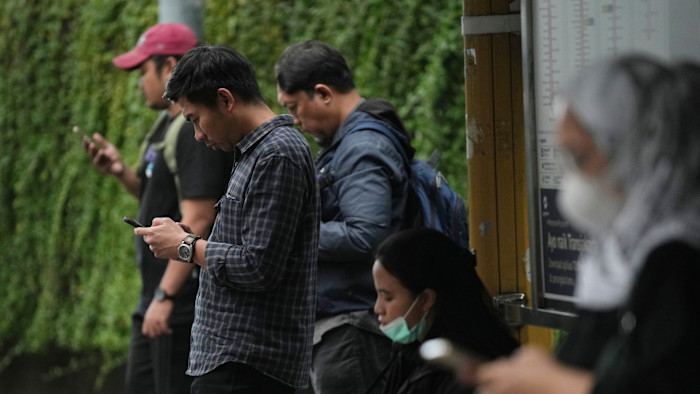
Two of Asia’s biggest social media markets have joined the growing list of countries imposing restrictions on access for under-16s.
Indonesia, south-east Asia’s largest economy, and Karnataka, the state at the heart of India’s technology sector, announced bans on social media use for children under the age of 16 on Friday.
Indonesia’s digital affairs minister Meutya Hafid said children under 16 would no longer be allowed to have accounts on “high-risk digital platforms”, including YouTube, TikTok, Facebook, Instagram, X and Roblox. She said the new rules would be implemented in stages beginning on March 28.
“This decision was taken because the threats in the digital space for children are increasingly real: pornography, cyberbullying, online fraud and digital addiction,” said the minister.
In India, Karnataka’s chief minister Siddaramaiah told the state’s legislature that social media would be banned for under-16s “with the objective of preventing adverse effects of increasing mobile usage on children”.
Karnataka is yet to share details of when and how it will implement the ban. The move by the southern state, which includes India’s tech hub of Bengaluru and has an estimated 72mn people, comes as the federal government in New Delhi considers similar national restrictions.
Australia became the first country to ban under-16s from accessing social media in December, and others including France, Malaysia and Spain have followed with similar proposals.
Any nationwide ban in India could become a bigger concern for US social media platforms, given the country’s 1.4bn population and fast growth rates that make it one of the most important global markets.
India led global downloads of social media apps last year, according to a report from market intelligence firm Sensor Tower, with 1.35bn downloads, followed by 711mn in the US.
Indonesia, with a population of about 290mn, was third with 450mn downloads.
Social media limits could become a diplomatic sore point between New Delhi and Washington as trade negotiations are expected to include discussions on digital services.
After the two sides signed an interim deal last month, the US said India had “committed to negotiate a robust set of bilateral digital trade rules that address discriminatory or burdensome practices and other barriers to digital trade”.
On the sidelines of India’s global AI summit last month, information and technology minister Ashwini Vaishnaw said many countries now accepted “that age-based regulation has to be there”.
“Right now we are in a conversation regarding deepfakes, regarding age-based restrictions with the various social media platforms” to find the “right way to go about this”, he said.
Karnataka announced its plans as part of the state government’s annual budget and they are expected to be approved by the state legislature. At least two other Indian states have said they are looking at similar restrictions.
“If multiple states keep doing this, and there is also momentum in different parts of the world, then the union government may feel the need to show that they are also doing something,” said Prateek Waghre, head of programmes at the Tech Global Institute think-tank.
Apar Gupta, a lawyer and founding director of advocacy group Internet Freedom Foundation, said there was “a lack of clarity at present, how the ban will be imposed, what will be its legal basis”.